 Port
PortEarnings Season — How to Prepare
Earnings season is a few weeks when your portfolio can change more than it did in the entire previous quarter. Preparation takes an hour.
Step One: Gather the Dates
Start with a list of publication dates for all the companies you own or follow. Note which ones report before the market opens and which report after it closes — this determines when you'll see the share price reaction.
Also, add the dates for key macroeconomic data. An inflation reading or an interest rate decision on the same day as an earnings report can completely overshadow the company's results.
Step Two: Check Market Expectations
For each company, note the consensus earnings per share and revenue, as well as the forecast range. A narrow range indicates analyst agreement — a result outside of it will be a surprise. A wide range means no one knows what to expect.
Pay attention to revisions in recent weeks. A wave of forecast downgrades just before the report tells you more about a shift in market sentiment than the consensus level itself.
Step Three: Assess How Much This Stock Usually Moves
The most practical number in the entire preparation: the average share price change in the session after previous publications. A company that typically moves by 2% and one that moves by 12% require a completely different approach to position sizing.
Also, check the history of surprises. A company that has beaten forecasts for eight consecutive quarters usually communicates cautiously — analysts learn this, and over time, just beating estimates may no longer be enough.
What Not to Do
- Don't increase your position just because “earnings should be good” — the market knows the same forecasts.
- Don't treat one quarter as proof of anything.
- Don't just read the headline. Management's guidance for future periods can be more important than the numbers for the past quarter.
Frequently Asked Questions
How long does earnings season last?
In the US market, it's about six weeks, starting from the second week after the quarter ends. In Poland, publications are more spread out.
Should you hold stocks through earnings announcements?
This is an individual decision, depending on your position size and tolerance for volatility. Portevo does not offer advice — it only shows how much a given company's share price typically moved after previous reports.
Where can I check the average share price movement after earnings?
On the company's page in Portevo, in the publication history section — next to each quarter, you'll see the share price reaction in the subsequent trading session.
Related
Get ready in five minutes
The earnings calendar shows dates, forecasts, and average share price movements after previous reports—for each company individually.
Portevo is not an investment advisor. The data and analyses are for informational and educational purposes only and do not constitute a recommendation or an offer to buy or sell financial instruments. Quotes are from external providers and may be delayed. You make investment decisions at your own risk.
Your entire portfolio, company earnings, and insider trades in one place
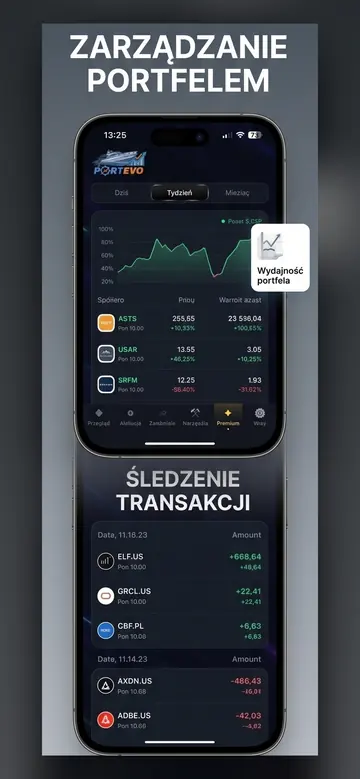
Upload your XTB report or add companies manually — Portevo will calculate your net profit after costs, show you the earnings dates for your companies, and display insider faces on charts.
- Portfolio with Net Profit After Costs
- Earnings Calendar for Your Companies
- Pelosi, Trump, and CEO Trades on a Chart
- Works in Browser and on iPhone
No credit card required. A demo portfolio is available immediately; create your own by uploading a report.